Commercial Gas Appliance Installation in Miami-Dade & Broward
Kitchen equipment, water heating and laundry, connected, tested and ready for the inspection your opening depends on.
Request Service Now
15+ Years
Serving South Florida
State Licensed
Gas Contractor
Dependable Service
Customer Approved
Commercial Gas
Contractor
A Commercial Kitchen Is Not a Big Domestic One
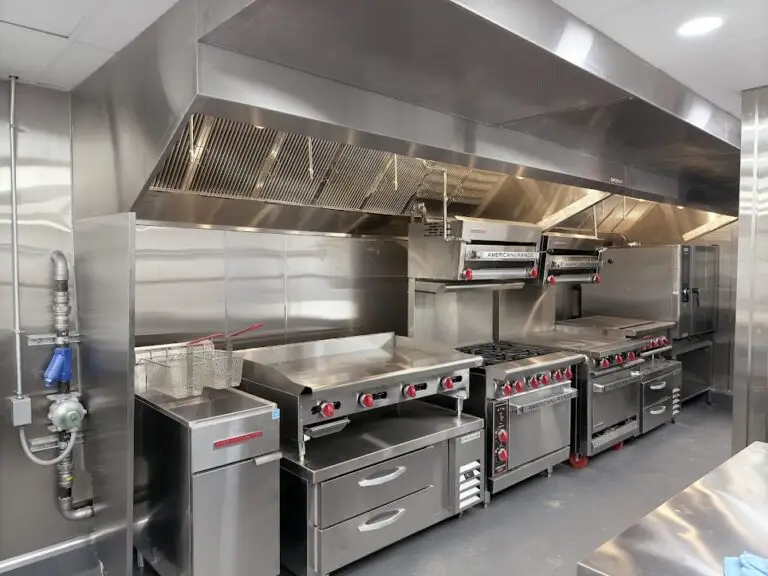
The numbers are the fastest way to see it. A domestic range draws somewhere around 65,000 BTU. A single commercial fryer can draw more than that on its own, and a six-burner range with an oven under it, a broiler and a couple of fryers together will pass the entire gas load of a typical house several times over.
So the question on a commercial appliance install is almost never whether the connection can be made. It’s whether the line and the meter feeding the room can carry what is about to be plugged into them, and whether the equipment that is already in there was accounted for when somebody last sized it.
Around the Clock Gas Service is a licensed gas contractor, Florida registration LQ12177, working across Miami-Dade and Broward County.
What Gets Connected in a Commercial Kitchen
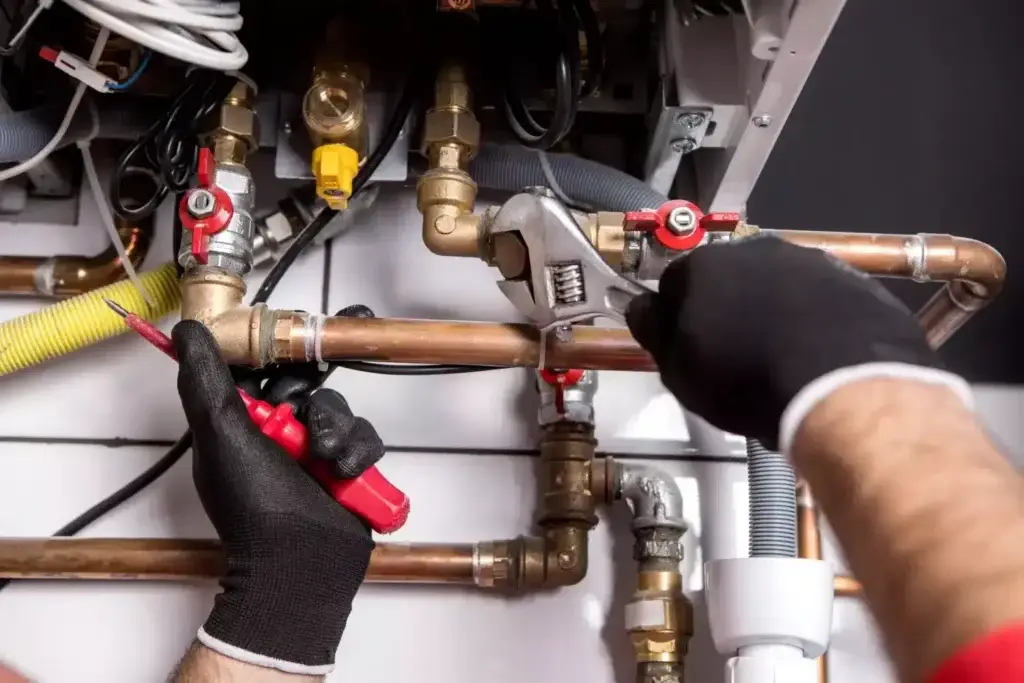
Ranges, ovens and broilers. Fryers, griddles and char grills. Steamers, kettles and tilt skillets. Commercial water heating, which in a kitchen is a far larger load than in a house because of sanitation temperatures and volume. Gas laundry equipment in hotels and multifamily.
Each piece needs its own accessible shutoff, the connector and quick-disconnect the manufacturer specifies, and a restraint where the equipment is on casters so the connector isn’t what stops it rolling. That last one is routinely missing, and it’s one of the first things an inspector looks for.
Property Types This Covers
Ranges, Ovens, & Broilers
Fryers, Griddles, & Char Grills
Steamers, Kettles, & Tilt Skillets
Commercial Water Heating
In a kitchen is a far larger load than in a house because of sanitation temperatures and volume.
Gas Laundry Equipment
In hotels and multifamily.
The Inspection Is the Deadline
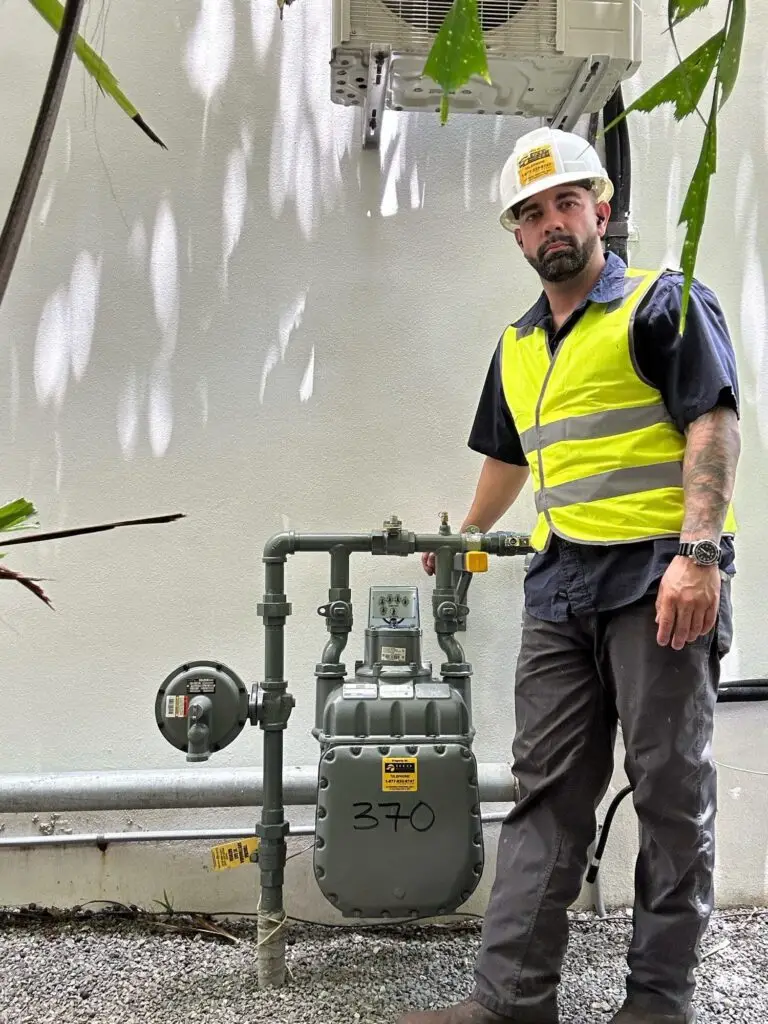
On a commercial kitchen the gas connection is rarely the last thing standing between a room and its opening date, but it’s frequently on the critical path to the thing that is. Equipment has to be connected before it can be tested, tested before it can be inspected, and inspected before a certificate arrives. Working out which inspections your opening actually depends on, and in what order, is worth doing before the schedule is promised to anybody.
The hood is the other half of that conversation. Gas cooking equipment under a hood only works properly if the makeup air does, and a kitchen that pulls harder than it supplies will affect how the appliances burn. It’s a mechanical and a gas question at the same time, which is exactly the kind of thing that falls between two trades on a build-out.
Then the window. Most commercial appliance work here happens in a room that is either about to open or already trading. In a trading restaurant the swap happens in a closure, and across these two counties the sensible closures are in the hot, quiet half of the year rather than between November and April, when the visitors and the revenue are here. A kitchen that waits until January to replace a fryer is choosing the most expensive possible week to do it.
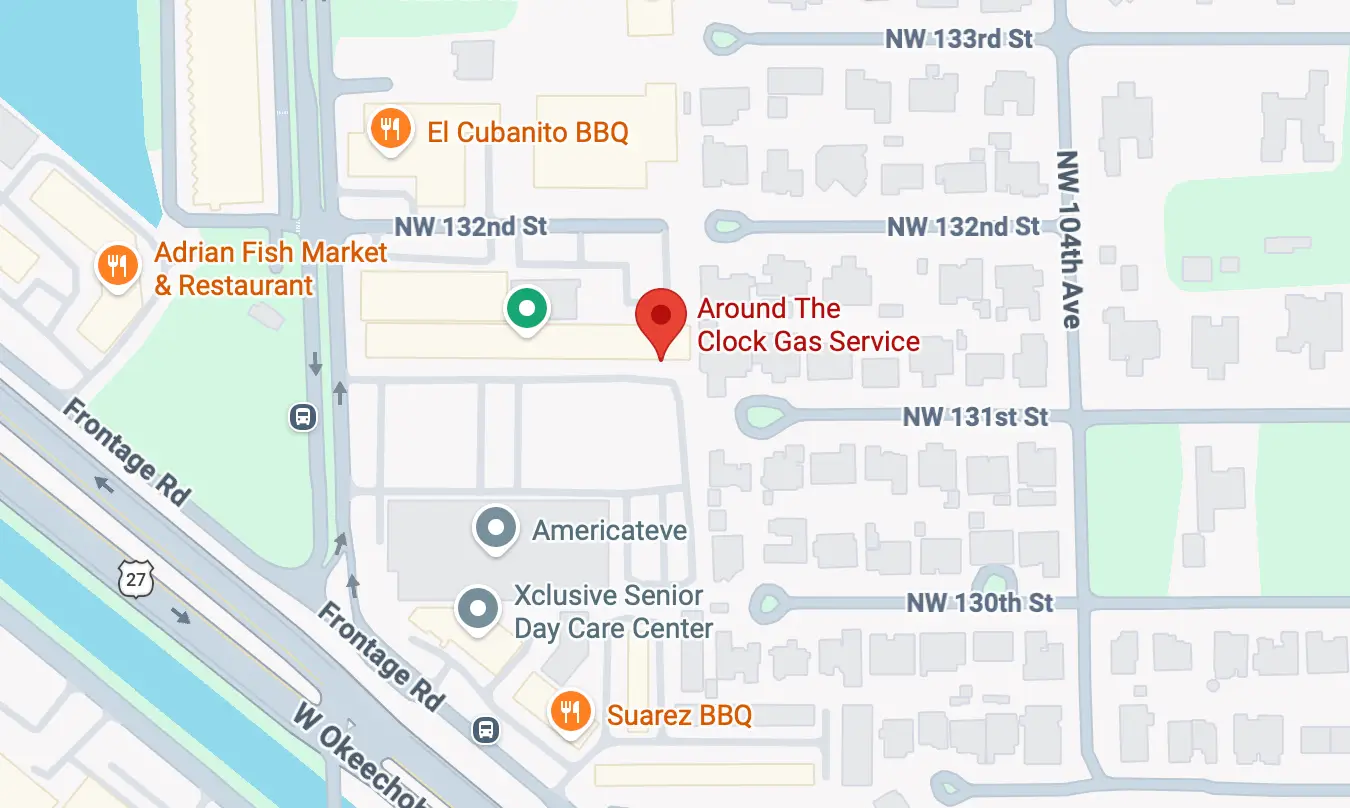
Proudly Serving Miami-Dade & Broward County
We work across Miami-Dade and Broward County from one shop in Hialeah Gardens. Out here traffic decides how long it takes to reach you far more than distance does, so if timing matters for your job, say so and we’ll be straight with you about it.
Miami-Dade County
- Miami
- Miami Beach
- Doral
- Homestead
- North Miami
- Aventura
- Pinecrest
- Key Biscayne
- Hialeah
- Coral Gables
- Kendall
- Cutler Bay
- North Miami Beach
- Sunny Isles Beach
- Palmetto Bay
Broward County
- Fort Lauderdale
- Pembroke Pines
- Coral Springs
- Pompano Beach
- Tamarac
- Weston
- Coconut Creek
- Hollywood
- Miramar
- Davie
- Sunrise
- Deerfield Beach
- Lauderhill
- Margate
Schedule Service or Request a Free Estimate
Have a question, an emergency, or a project in mind?
Call Us
(305) 231-3632
Email Us
Request a Free Quote
Questions About Commercial Gas Appliance Installation
Here are answers to the questions South Florida homeowners ask us most. Need something else? Just give us a call — we’re happy to help.
Can our existing gas line handle the new equipment?
That is the question, and it is worth answering before the equipment is ordered. Commercial cooking equipment draws heavily: a single fryer can exceed the load of a domestic range, and a full line of equipment will pass the gas load of an entire house several times over. The answer comes from adding the new load to what is already in the room and comparing it against what the line and the meter can carry.
What inspections does a commercial kitchen gas install involve?
It varies by municipality, and there are dozens of separate building departments across the two counties. What is consistent is the order: equipment connected, system tested, then inspected, and the certificate comes after that. Work out early which inspections your opening depends on, because the sequence is usually what decides whether a date is achievable.
Does the hood affect the gas equipment?
Yes, and it is a common gap on a build-out because it sits between trades. Gas cooking equipment under an exhaust hood depends on adequate makeup air. A kitchen that exhausts more than it supplies will affect how the appliances burn. If the hood and the gas are being handled by different people, somebody needs to own the overlap.
Can equipment be swapped without closing?
Sometimes, depending on what is being replaced and how the room is laid out, but plan for a closure window rather than hoping to avoid one. The more useful question is when. Across Miami-Dade and Broward the busy season runs roughly November through April, so a swap scheduled into the quiet, hot half of the year costs a fraction of the same swap in season.
Do commercial appliances need different connectors?
Yes. Commercial equipment uses connectors and quick-disconnects rated for it, and anything on casters needs a restraint so that the connector is not what stops the equipment rolling away from the wall. That restraint is missing more often than not on equipment somebody moved in themselves, and it is one of the first things an inspector checks.