
Gas Leak Detection and Safety Inspections in Miami-Dade & Broward
If you can smell gas right now, the instructions are below. Read those first.
Request Service Now
15+ Years
Serving South Florida
State Licensed
Gas Contractor
Dependable Service
Customer Approved
Commercial Gas
Contractor
If You Smell Gas, Leave First
Get everyone out of the building before you do anything else. Don’t flip switches, don’t unplug anything, don’t use the phone inside, and don’t go hunting for the leak yourself. From outside, call your gas utility’s emergency line or 911. That is the right first call at any hour, and it is free.
Then call us. We handle gas emergencies during business hours. We don’t take after-hours emergency calls, and we would rather tell you that here than leave you waiting on a callback at midnight.
Where a Gas Detector Goes Depends on Which Gas You Have
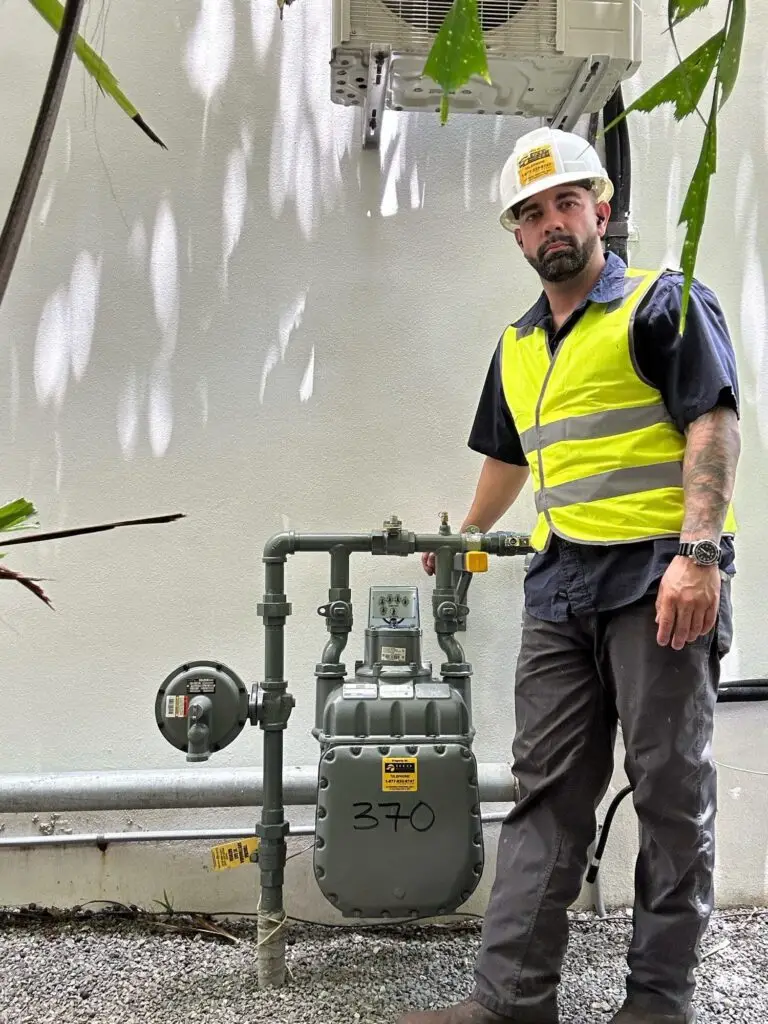
This is the detail that gets missed most often, and it is the difference between a detector that works and one that is decoration.
Natural gas is lighter than air. It rises, and it collects at ceiling level and in attic spaces. A detector for natural gas goes high on the wall.
Propane is heavier than air. It sinks, and it pools at floor level, in low spots and in anything below grade. A propane detector goes low, near the floor.
Put one at the wrong height for the fuel in the house and it may never see the leak it is there for. If your home runs on propane rather than a utility connection, which is common in the manufactured housing out in the west of Hialeah Gardens and across a lot of the newer western developments, that is the height to check tonight.
A carbon monoxide alarm is a separate device and does not substitute for either.
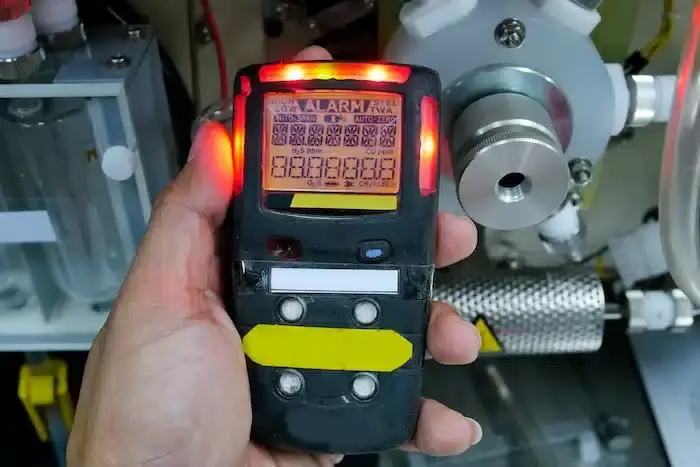
Gas Has No Smell Of Its Own
The rotten egg odor is mercaptan. It is added on purpose, at the utility, precisely so a leak is something a person can detect without equipment. That is worth knowing for one reason: the smell is a safety feature doing its job, not a sign that something has already gone badly wrong. A faint one still counts.
Not every leak announces itself that way. A gas bill climbing with no change in habits, a hissing near piping, a burner flame that has gone yellow instead of blue, or a dead strip of grass running in a straight line across the yard are all worth a look. The grass one is specific: gas escaping underground displaces oxygen at the root zone, so the die-off follows the pipe.
Gas Safety After a Storm
Hurricane season runs June through November. Two things come up afterwards and almost nobody publishes about either.
If an appliance has been under water, it does not get relit until somebody has looked at it. Flood water gets into control valves, burners and venting, and a gas control that has been submerged cannot be trusted to shut off when it should. That applies to water heaters, ranges and pool heaters alike.
And if there is a gas smell after flooding or after heavy debris movement, treat it exactly the same as any other gas smell. Outside first, then the utility or 911. Storm conditions are the worst possible time to go looking for a leak with a flashlight.
What a Gas Safety Inspection Actually Covers
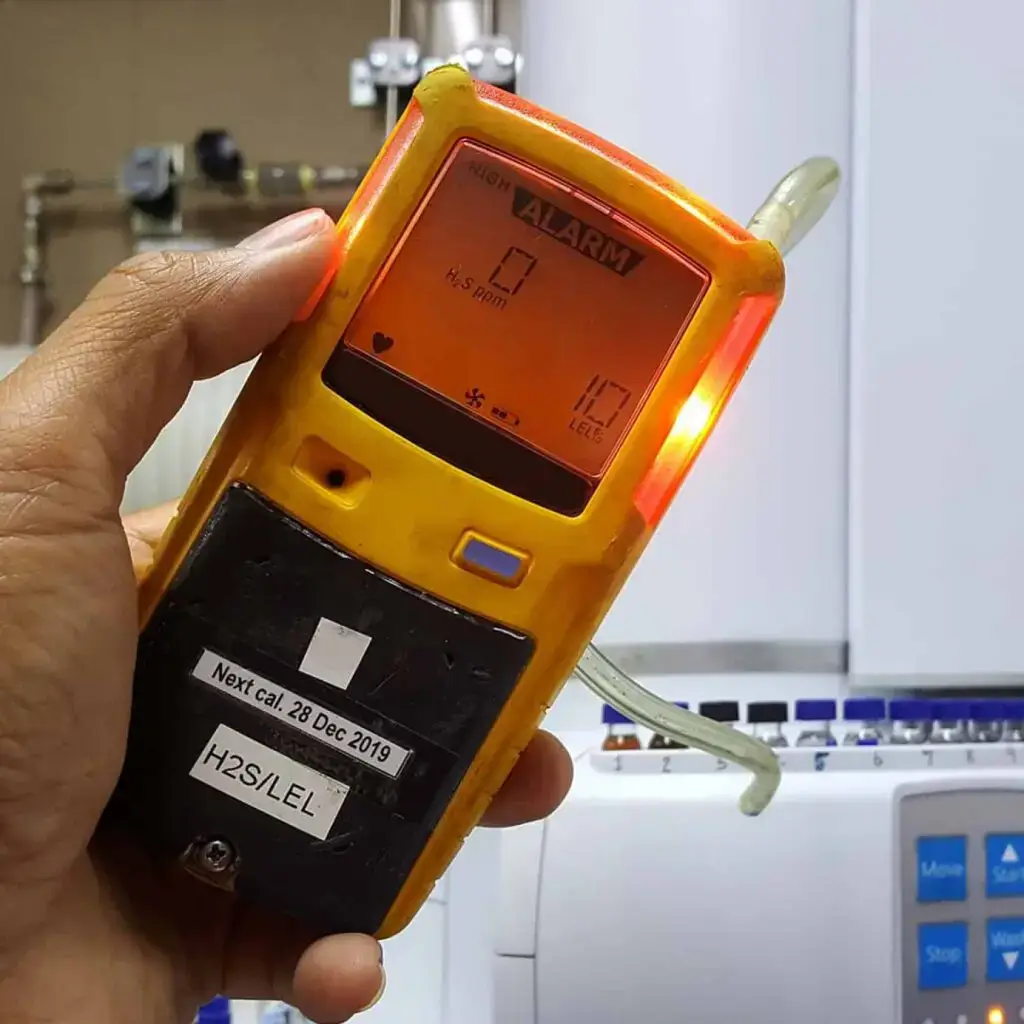
An inspection is a walk of the whole system rather than a look at one appliance. What that means in practice:
Visible piping, checked at the points where it actually fails, which is where it enters the ground or comes through a wall rather than along the middle of a run. Connectors at each appliance, which have a service life and are not meant to be reused from one appliance to the next or run through a wall or a cabinet back. Shutoff valves, checked for presence and accessibility at each appliance. A pressure test on the system. And CSST bonding, which is the flexible corrugated tubing being properly tied into the home’s electrical ground.
That last one matters more in Florida than almost anywhere. This state gets more lightning than any other, and CSST that is not bonded can be arced through by a nearby strike. It is a common finding on runs nobody has inspected since installation.
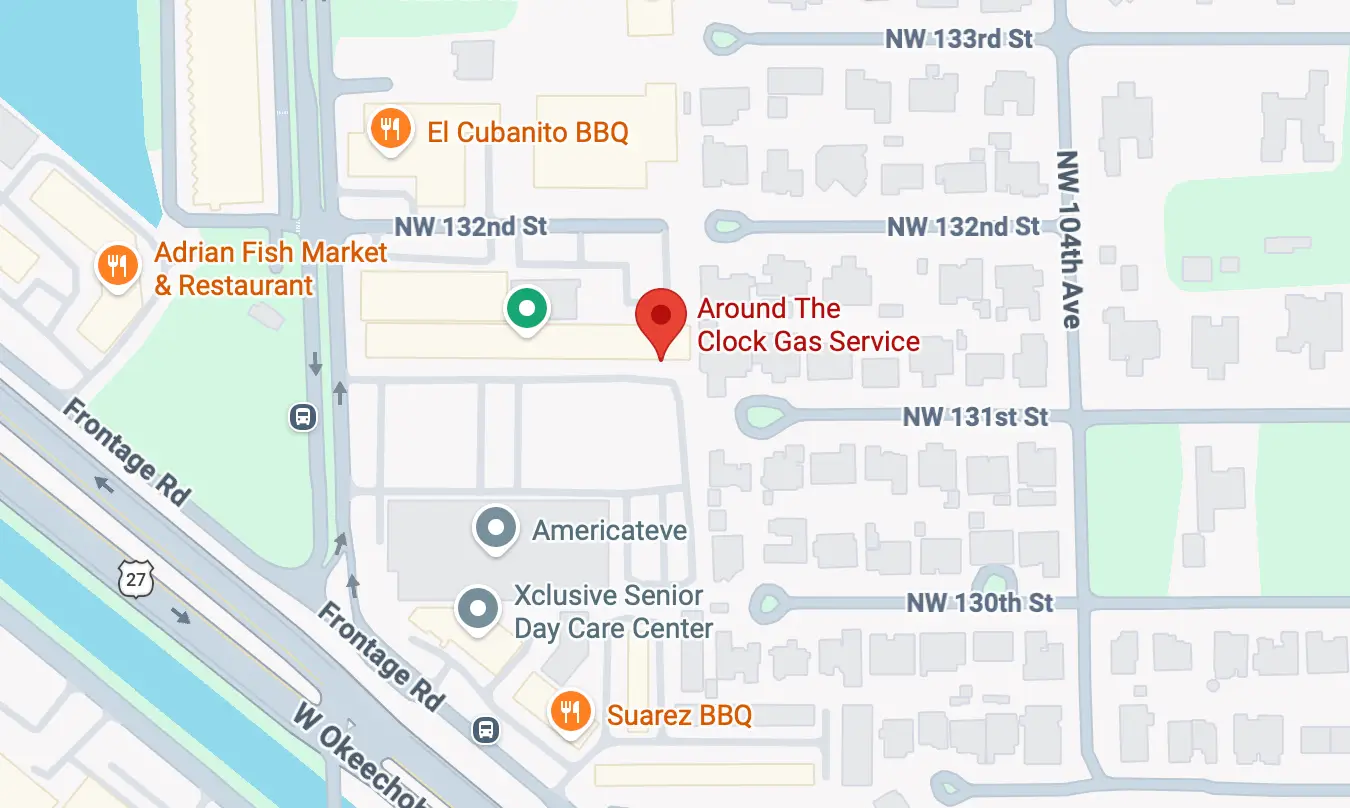
Proudly Serving Miami-Dade & Broward County
We work across Miami-Dade and Broward County from one shop in Hialeah Gardens. Out here traffic decides how long it takes to reach you far more than distance does, so if timing matters for your job, say so and we’ll be straight with you about it.
Miami-Dade County
- Miami
- Miami Beach
- Doral
- Homestead
- North Miami
- Aventura
- Pinecrest
- Key Biscayne
- Hialeah
- Coral Gables
- Kendall
- Cutler Bay
- North Miami Beach
- Sunny Isles Beach
- Palmetto Bay
Broward County
- Fort Lauderdale
- Pembroke Pines
- Coral Springs
- Pompano Beach
- Tamarac
- Weston
- Coconut Creek
- Hollywood
- Miramar
- Davie
- Sunrise
- Deerfield Beach
- Lauderhill
- Margate
Schedule Service or Request a Free Estimate
Have a question, an emergency, or a project in mind?
Call Us
(305) 231-3632
Email Us
Request a Free Quote
Questions About Gas Leaks & Safety Inspections
Here are answers to the questions South Florida homeowners ask us most. Need something else? Just give us a call — we’re happy to help.
I think I smell gas. What should I do right now?
Leave the building, with everyone in it. Don’t touch light switches, don’t unplug anything and don’t use a phone until you are outside. From outside, call your gas utility’s emergency line or 911. Don’t go back in to look for the source. That is the right sequence at any hour, and the utility call is free.
Where should a gas detector go in my house?
It depends which fuel you have, and this is the detail people get wrong. Natural gas is lighter than air, so it rises and a detector belongs high on the wall. Propane is heavier than air, so it pools at floor level and a detector belongs low. A detector mounted at the wrong height for the fuel may never see the leak it was bought for.
How is a gas leak actually located?
By narrowing it down rather than guessing. A pressure test on the system shows whether it is losing gas at all and roughly how fast. From there it is a matter of isolating sections and checking joints, connectors, valves and appliance connections, including the parts that run underground or behind a wall. The test tells you there is a leak. The isolation tells you where.
How often should a gas system be inspected?
Annually is the usual advice, and it is more useful after a change than on a calendar. Worth doing after you add an appliance, after work has been done on the system, after a flood or a major storm, and when you buy a house with gas you did not install. An older run nobody has looked at since it went in is the one most likely to turn something up.
What is CSST bonding, and why does it matter in Florida?
CSST is the flexible corrugated tubing used for gas in a lot of newer work. It has to be bonded to the home’s electrical grounding system, and when it is not, a nearby lightning strike can arc through the tubing wall. Florida has the highest lightning strike density in the country, which makes an unbonded run a bigger problem here than in most places.